 SDG 11 - Sustainable Cities
Rapid Own Source
Revenue Analysis
An evidence-based, quantitative decision-making tool for local finance practitioners seeking to optimize own-source revenues (OSRs) in developing cities and subnational governments.
What is the ROSRA?
ROSRA stands for:
ROSRA is a UN-Habitat diagnostic tool that helps local governments see where their own source revenue (OSR) system stands today and how much room there is to improve under current legislation.
Using a quantitative approach, it estimates actual OSR gaps and shows how much revenue is being left untapped, helping mobilize political support for reforms.
Strategic Decision Making
Clear visualization of OSR gaps for informed decisions
Reform Prioritization
Prioritize interventions and allocate resources effectively
Enhanced Creditworthiness
Strengthen municipal finance foundations
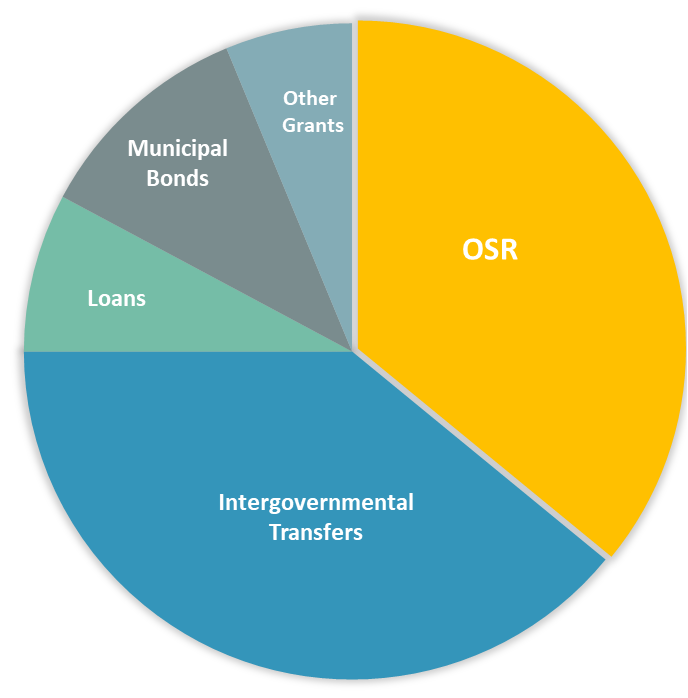
What is Own Source Revenue (OSR)?
OSR is one of several revenues of local governments
OSRs are taxes, fees, licenses, etc. directly controlled by local governments
Property Tax
Recurrent tax on land or property
Other Taxes
Local Sales Tax, Excise Tax, Hotel Tax, Vehicle Tax
User Fees
Parking, Road Tolls, Market Fees, Transit
Licenses & Permits
Business Permit, Liquor License, Health License
Fines & Penalties
Parking Fines, Late Payment Fees
Revenue from Assets
Public Land, Buildings, Investments
Why Optimize OSR?
Increases Resources
Close unfunded mandates, maintain infrastructure and invest in development.
Increases Autonomy
Reduce dependence on inter-governmental transfers (IGT) to cover expenditure needs.
Strengthens Social Contract
When collecting taxes and fees, governments become more accountable to constituents.
Improves Capacity
Improvements in accounting, procurement, technology and auditing practices.
Enables Leveraging
Impact economic growth, income distribution, and correct market failures.
Increases Creditworthiness
Creditors assess debt repayment likelihood based on local revenue generation.





Who is the ROSRA for?
The ROSRA was designed primarily for government officials in local governments in low-income and fragile state contexts.
It can also be used by non-governmental partners with access to revenue related data of local governments.
Secondary Cities
Better suited for secondary cities rather than very large urban metropoles
Senior Management
Functions best when supported by senior management with technical staff input
Land-Based Finance
Particularly helpful where land-based finance systems are present at the local level
How does the ROSRA work?
Analysis Process
The ROSRA analyses user data by comparing it with accepted benchmarks and the specific characteristics of well-functioning OSR systems observed in peer local governments.
Authority & Incentives
The authority and incentives of local government to raise OSR
Capacity Assessment
The capacity and incentives of the revenue administration
Strategy & Management
The strategy, management and collection processes
Required Input Data
Socio-economic data
GDP, population statistics
Budget data
Revenue and OSR data from past financial year
Management data
OSR environment, management and administration details
Data Privacy
Only visible to the local government itself
UN-Habitat will only use data after gaining explicit formal permission
All data input into the ROSRA is completely confidential
What People Are Saying
"The ROSRA shows us that we have essentially been doing everything wrong in regard to OSR"
"This is the most accurate analysis of our OSR system that we have received until now and it is spot on"
"I am not aware that such a tool exists, and it is quite needed to support local governments in optimizing their OSR"
"This tool adopts an interesting and promising methodology to support local governments in the critical area of OSR"
Why Choose UN-Habitat?
Data
We bring the best of global data paired with exemplary analysis to provide the most tailored and effective recommendations.
Experience & Expertise
Global experience on municipal finance issues in many countries and contexts. Our network of experts bring extensive knowledge.
Funds Mobilization
When supported by a UN agency, it becomes easier to mobilize funding from other sources.
Political Weight
The UN name provides credibility and political stature to act on recommendations.
Ready to Optimize Your Revenue Systems?
Start analyzing your revenue gaps and unlock your municipality's financial potential for sustainable urban development.
City photographs from Unsplash (free to use) | SDG icons © United Nations | Icons by Font Awesome